France Casino Floor: What Is the Minimum Bet?
The minimum bet on a France casino floor is not a courtesy threshold — it is a hard-coded floor limit engineered to filter player liquidity before a single chip hits the felt. Walk into any licensed French gaming house and the number staring back at you from the table placard is the product of regulatory arithmetic, not hospitality. The French regulator, the Autorité Nationale des Jeux, sets the outer boundary, but each establishment calibrates its own floor based on table type, arrondissement demographics, and the brutal economics of house edge per hour. Get this wrong and you are either bleeding bankroll on a table you cannot afford or getting escorted off a private salon you never qualified for.
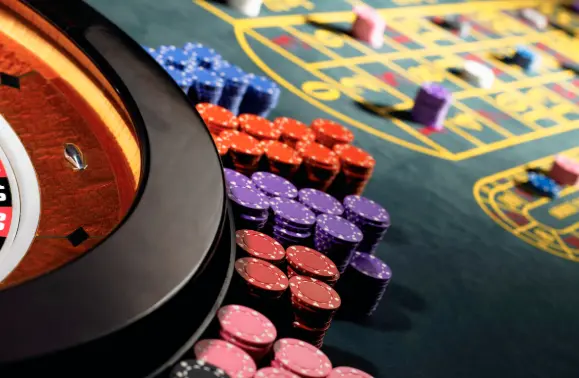
The Regulatory Skeleton Behind the Placard
France does not let casinos freestyle their table minimums. The ANJ framework mandates that electronic gaming machines carry a maximum bet ceiling and that table games operate under approved rule sets, but the minimum bet itself is a commercial decision bounded by licensing conditions. Land-based table minimums typically start at €1 to €2 for automated roulette terminals, climb to €5 to €10 for live roulette and blackjack on the main floor, and hit €25 to €100 in the private salons of Parisian and Riviera properties. 🤔 The trap for newcomers is assuming the terminal minimum equals the live-table minimum. It never does. The electronic roulette carousel outside the main pit is a liquidity sponge; the croupier-manned table behind the velvet rope is the real gatekeeper.
Why the Minimum Bet Is a Liquidity Filter, Not a Welcome Mat
Casino floor managers treat the minimum bet as a throughput governor. A €5 blackjack table with six seats running sixty hands per hour generates roughly €1,800 in hourly handle per seat — if every seat is filled and every player flat-bets. Drop the minimum to €1 and the handle collapses, the dealer cost per euro wagered triples, and the pit loses money on labor alone. That is the cold math. So when you see a €10 minimum on a Tuesday afternoon, it is not random — it is the floor manager defending the table's revenue-per-hour against the wage bill. The table minimum is a break-even calculation dressed up as a courtesy.

Table-by-Table Minimum Bet Reality Check
Here is the granular breakdown you actually need. American roulette on the French main floor: €5 minimum, €500 maximum, double-zero wheel, house edge 5.26%. European roulette: €5 to €10 minimum, single-zero, edge 2.7% — the only table where the minimum bet is defensible on a pure expected-value basis. Blackjack: €5 to €15 minimum on the main floor, €25 to €50 in salons, with the caveat that French blackjack rules often restrict doubling and splitting in ways that quietly inflate the effective house edge. Baccarat: €10 to €20 minimum on the main floor, €100 plus in private rooms. Punto banco is the banker's game in France, and the minimum reflects it. Poker cash games: €2/€5 blinds as the standard floor entry, with €1/€2 appearing only in regional casinos during off-peak hours.
The Terminal Loophole and Its Hidden Cost
Automated roulette terminals advertise €1 minimums, and technically they deliver. But run the arithmetic: a €1 minimum on a sixty-spin-per-hour terminal with a 2.7% edge produces an expected loss of €1.62 per hour — trivial. The problem is behavioral, not mathematical. Players who sit at a €1 terminal do not flat-bet €1; they press, cover numbers, and chase. The terminal minimum is a psychological anchor that pulls average bet size down while spin frequency stays constant, which means the house extracts its edge on a faster cycle. 😤 The €1 terminal is not a cheaper game — it is a higher-frequency game with a lower entry point, and frequency is where the house wins.
Reading the Floor Without Getting Read
The sharpest move on a France casino floor is to ignore the posted minimum and calculate the effective minimum instead. Take the table minimum, multiply by the number of decisions per hour, multiply by the house edge, and that is your true hourly cost of sitting down. A €10 European roulette table at forty spins per hour costs you €10.80 per hour in expected value. A €5 American roulette table at the same pace costs €10.52. The cheaper-looking table is not cheaper. The France casino floor is engineered so that the placard number misleads anyone who does not run the math, and the properties count on that misdirection to fill seats at margins that look generous and perform ruthlessly.